

Digital Marketing continues to grow and evolve, but despite the constant “shiny new thing” and “top trends for 20XX” the reality is that the staples of digital marketing, the tried and true ways to grow your business and get results, haven’t changed much at all.
In my book, Digital Marketing that Actually Works, I created a digital marketing landscape model graphic to help organize the digital marketing tools most likely to grow results.
The Digital Marketing Landscape Ecosystem is a valuable tool to help you consider the entire realm of digital marketing and prioritize where to spend your resources.
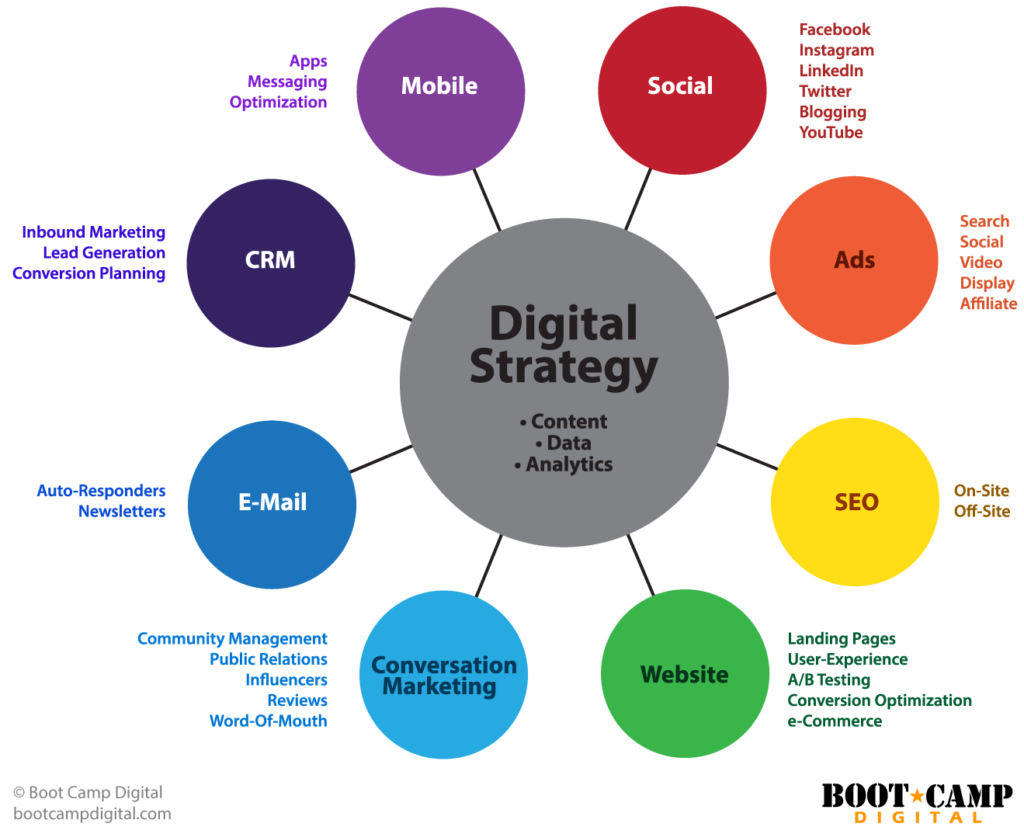
There are 8 sections in the Digital Marketing Landscape to consider as part of your strategy. AI isn’t listed as a separate channel because it influences how businesses use the existing channels, from content creation and search visibility to advertising and customer engagement.
Even now, with the buzz around innovative new technologies, executing the tried and true marketing tools with excellence is the foundation of your success.
Start with Strategy
At the core is your Digital Strategy – what exactly are you trying to achieve? Determine this FIRST. Be sure to clearly link your goal, strategy, objective and tactic. Your strategy should guide which digital marketing channels you prioritize and how they work together to drive results.
Remember: Content, Data & Analytics
Content, data and analytics are at the heart of everything you do in digital marketing. Great content is what drives your digital marketing channels, while data and analytics help you understand what’s working and where you can improve.
These elements work across your entire digital marketing ecosystem, helping you make better decisions and get stronger results.
How Does Each Channel Fit into the Digital Marketing Ecosystem?
Social Media Marketing
Social media is a powerful way to build awareness, connect with your audience and grow your business. Platforms like Facebook, Instagram, LinkedIn, TikTok and YouTube offer different opportunities to reach your target audience. Social media also plays a growing role in search and discovery, as people increasingly use these platforms to research products, find information and discover brands.
The key is choosing the right platforms for your audience and goals rather than trying to be everywhere. Learn how to build an effective social media presence with our Social Media Marketing Master Certification.
Digital Ads
More money is going towards digital advertising vs. traditional advertising, and you can use digital ads for almost any advertising objective. The major types of digital ads include Search Ads, Display Ads, Social Ads, and Video Ads. Consider how each fits into your strategy and master one before trying to do more. AI is making digital ads even smarter, so take advantage of automation and tracking tools to improve your results.
The key is choosing the right advertising channels based on your audience, goals and budget. Learn more about the different types of digital advertising in our Digital Advertising Structure: Digital Ads course.
SEO (Search Engine Optimization)
SEO is about making sure your business can be found when people are searching for what you offer. This includes optimizing your website, creating high-quality content, and building credibility so search engines understand your business and show it in relevant results.
Search is also changing with AI. Google AI Overviews, AI Mode, and AI assistants like ChatGPT are changing how people find information and discover brands. Your content now has opportunities to appear in traditional search results and be referenced in AI-generated answers. The fundamentals of SEO still matter, but you also need to think about how your business shows up in AI-powered search.
Focus on creating useful content that answers your audience’s questions and makes it easy for search engines and AI tools to understand what you offer. Learn how to improve your visibility with our SEO Master Certification.
Websites
Your website is the hub of your digital marketing efforts. It is where people go to learn about your business, explore your products and services, and ultimately take action. Think about clear, clean, and simple designs that load quickly and work well on mobile devices. Your website should make it easy for visitors to find what they need and take the next step. As people discover your business through search, social media, and AI tools, a great website experience is essential to turning visitors into customers.
Conversation Marketing
Word-of-mouth is still one of the most powerful ways to grow your business, and social media makes it easier than ever for customers to share their experiences and recommend brands. Think about how you can encourage conversations, customer reviews, and recommendations. Influencer marketing is another way to reach new audiences and build trust through people they already follow. AI-powered chatbots and messaging tools also make it easier for businesses to have direct conversations with customers and answer their questions.
Email Marketing
Email marketing continues to be one of the most effective ways to reach your audience and drive results. It gives you a direct way to communicate with customers and prospects, build relationships, and stay top-of-mind. With email automation and personalization, you can send the right messages to the right people based on their interests and actions. Focus on optimizing your email content to provide value and give people a reason to open, read, and take action.
CRM
Data is the name of the game, and a CRM helps you learn more about your customers. While privacy laws and changes in data tracking are making it more challenging to collect and use customer information, first-party data is more valuable than ever. Focus on learning about your customers, capturing information responsibly, and using that data to personalize your marketing and build stronger relationships. Consider whether your business is getting the most out of its CRM.
Mobile
Mobile is a huge part of digital marketing, and people are using their phones for just about everything. From searching and shopping to social media and email, mobile is now part of almost every digital marketing channel. Think about how your marketing looks and works on a mobile device. Your website, content, ads, and emails should all be easy to use on a small screen. Make sure you’re following mobile marketing best practices to create a great experience for your audience.
How AI Fits into the Digital Marketing Landscape
AI is changing how we approach almost every area of digital marketing, from creating content and optimizing ads to improving search visibility and understanding customers.
The interesting thing is that AI doesn’t replace the digital marketing channels in this landscape. It changes how we use them. AI tools can help you work faster, analyze data, personalize marketing, and improve results across your digital marketing efforts.
The key is to start with your strategy and consider where AI can actually make a difference. Just because you can use AI for something doesn’t mean you should. Focus on the tools and opportunities that help you achieve your marketing goals. Understanding how to strategically use AI for marketing can help you identify where it will have the biggest impact.
What Should You Do?
Consider how each channel can help you achieve your goals and objectives, but keep in mind that it is better to do one thing well vs. many things poorly. With AI creating even more opportunities, it’s important to stay focused on what will actually drive results for your business. We also cover this in our Digital Marketing Strategy Training Course.
Last Updated November, 10, 2026.