

Social media is constantly changing, and the best practices that worked a few years ago may not work today. In 2026, you need to understand how each social network works and what gets results on each platform.
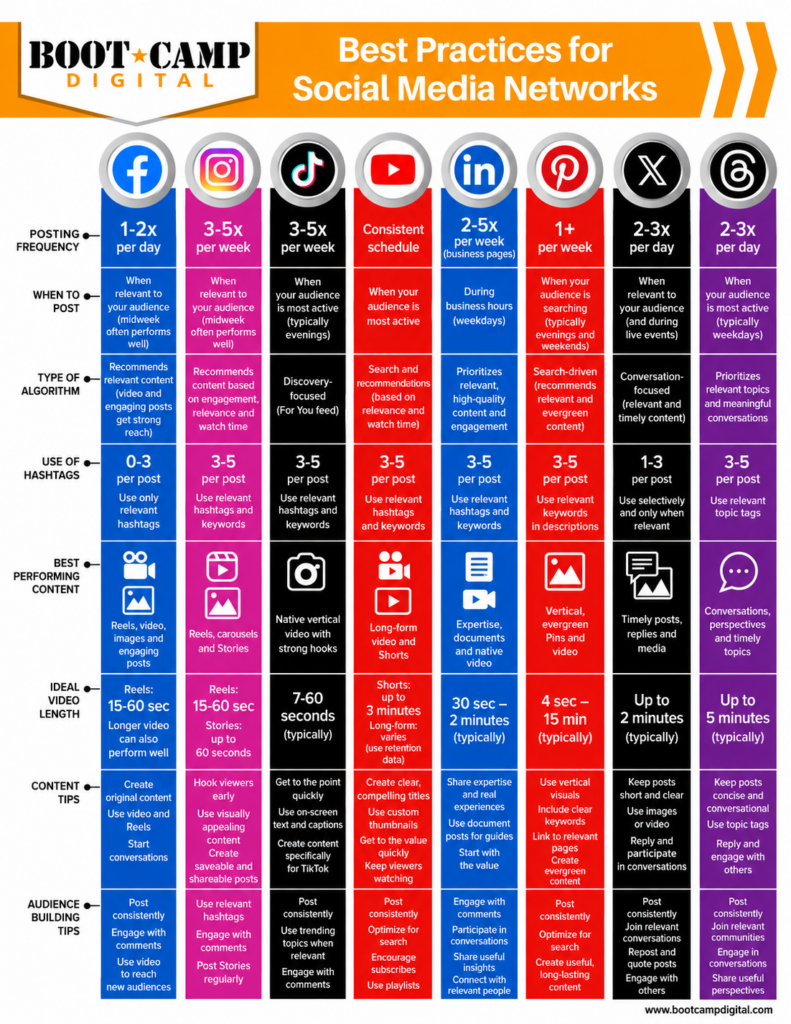
This social media cheat sheet gives you a quick look at current best practices across the major social networks. Use it to guide how often you post, what content you create, how you use video, and how you optimize your content for reach and engagement.
Social Media Cheat Sheet: Jump to a Platform
Social Media Best Practices by Platform
There isn’t one set of social media best practices that works everywhere. Your audience uses each platform differently, and your content should reflect that.
If you want to build a stronger plan before diving into individual platforms, our Social Media Marketing Master Certification covers social media strategy, content, platforms, measurement and optimization.
Facebook gives you a variety of ways to reach and engage your audience. A good starting point is 1–2 posts per day, but your results should ultimately determine how often you post.
Use a mix of Reels, video, images, links and conversation-focused posts instead of relying on a single format. Reels and video can help you reach audiences beyond your existing followers, while engaging posts give your community a reason to comment and share.
Facebook increasingly prioritizes original content, so avoid simply reposting someone else’s video with minor changes. Create content that gives your audience something useful, interesting or worth responding to.
Facebook best practices:
- Post about 1–2 times per day as a starting point.
- Prioritize original Reels and video.
- Mix video with images, links and engaging posts.
- Create content that encourages meaningful comments and shares.
- Use your Page insights to adjust your posting frequency.
Instagram is highly visual, but a great-looking post alone isn’t enough. Your content needs to grab attention quickly and give your audience a reason to watch, save, share or engage.
A good starting point is 3–5 feed posts or Reels per week, with Stories used more frequently to stay connected with your existing audience.
Use Reels when you want to increase discovery and reach. Carousels work well when you have useful information people may want to swipe through, save or share. For many Reels, 15–60 seconds is a useful starting range, but the content should determine the length.
Instagram best practices:
- Post approximately 3–5 times per week.
- Use Reels to increase discovery and reach.
- Use carousels for useful, saveable information.
- Aim for roughly 15–60 seconds for many Reels.
- Put your hook in the first few seconds.
- Use focused, relevant hashtags instead of hashtag stuffing.
- Include keywords naturally in your captions to support discovery.
TikTok
TikTok is built around content discovery. You don’t need a large existing following for your content to reach new people.
Start with approximately 3–5 videos per week and increase your frequency if you can consistently create useful, relevant content.
Your videos should get to the point quickly. Use a strong opening, vertical video, on-screen text and captions to make the content easy to understand. TikTok is also an important search and discovery platform, so clearly communicate what your video is about through your spoken words, on-screen text and caption.
TikTok best practices:
- Start with 3–5 videos per week.
- Hook viewers immediately instead of using a long introduction.
- Create vertical, mobile-first video.
- Use on-screen text and captions.
- Include clear keywords related to your topic.
- Use trends when they make sense for your audience.
- Create content specifically for TikTok instead of simply reposting content from other platforms.
If TikTok is important to your business, you can go deeper with TikTok courses and resources included in our Social Media Marketing Master Certification.
YouTube
YouTube is both a video platform and a powerful search and discovery tool. Your videos can continue reaching people through search, recommendations and suggested content long after you publish them.
There isn’t one ideal YouTube video length. Make your video long enough to deliver the value without adding unnecessary content, then use your audience retention data to see where viewers stay engaged or drop off.
YouTube Shorts can be up to 3 minutes long. For both Shorts and long-form videos, get to the point quickly and give viewers a reason to keep watching.
Your title and thumbnail are also critical. Make the topic clear, put important words toward the beginning of your title, and use a thumbnail that accurately communicates why someone should watch.
YouTube best practices:
- Use a consistent publishing schedule you can realistically maintain.
- Let the content and audience retention determine video length.
- Create Shorts up to 3 minutes long.
- Get to the value quickly instead of using a long branded introduction.
- Use clear, compelling video titles.
- Create accurate, attention-grabbing thumbnails.
- Review audience retention to understand what keeps people watching.
Learn how to build your channel, increase visibility and use YouTube strategically in our YouTube Marketing Course for Business.
LinkedIn works best when you share expertise and participate in relevant professional conversations. Instead of only posting company news, give your audience useful information, experiences and perspectives they can learn from.
For business pages, 2–5 posts per week is a useful starting point. Individual professionals can often build visibility with 1–3 strong posts per week.
LinkedIn gives you several formats to work with, including text, images, native video, polls and documents. PDF and document posts are especially useful for sharing frameworks, guides, presentations and educational carousel-style content.
For many native social videos, 30 seconds to 2 minutes is a useful range. Start with the value instead of a long setup.
LinkedIn best practices:
- Business pages can start with 2–5 posts per week.
- Individual professionals can start with 1–3 thoughtful posts per week.
- Share expertise, experiences and useful professional insights.
- Use document posts for educational or step-by-step content.
- Keep many native videos around 30 seconds–2 minutes.
- Respond to comments on your posts.
- Participate in other people’s conversations instead of only publishing your own content.
Pinterest works differently from most social networks because people use it heavily for search and discovery. Your content can continue reaching people long after the day you publish it.
Publish at least one fresh Pin per week as a starting point. If Pinterest is an important traffic source for your business, publishing several useful Pins per week gives you more opportunities to be discovered.
Create vertical visuals that make the topic easy to understand. Use descriptive titles and relevant keywords so Pinterest understands your content and can surface it for the right searches.
Pinterest best practices:
- Publish at least one fresh Pin per week.
- Use vertical, easy-to-understand visuals.
- Include relevant keywords in Pin titles and descriptions.
- Link Pins to useful, relevant pages on your website.
- Create evergreen content that can continue earning traffic.
- Focus on what your audience is searching for, not only what you want to promote.
X
X is a fast-moving platform built around timely conversations and real-time information. Because conversations move quickly, you can generally post more frequently here than on many other social networks.
A useful starting point is approximately 2–3 posts per day. You can post more frequently when your business is participating in live events, trending conversations or timely industry discussions.
Keep each post focused on one clear idea. Use images, video and links when they strengthen the message, and spend time replying to other people instead of only publishing standalone posts.
X best practices:
- Start with approximately 2–3 posts per day.
- Post more frequently around relevant live conversations.
- Keep posts focused on one clear idea.
- Use images and video when they add value.
- Reply and participate in conversations.
- Repost or quote-post useful content and add your perspective.
- Use hashtags selectively instead of adding several to every post.
Threads
Threads is a conversation-focused platform where you can share ideas, participate in discussions and connect with communities around specific topics.
A useful starting point is approximately 2–3 posts per day. Posts don’t need to be highly produced. Short observations, useful perspectives, questions and timely conversations can all work well.
Use relevant topic tags to help people discover your posts, and spend time replying to other users. Threads works best when you treat it as a conversation rather than another place to broadcast the same content you already posted elsewhere.
Threads best practices:
- Start with approximately 2–3 posts per day.
- Keep standard posts concise and conversational.
- Use relevant topic tags to support discovery.
- Participate in communities related to your expertise.
- Reply frequently and engage in conversations.
- Use reposts and quote posts to add your perspective.
- Don’t simply duplicate every Instagram caption on Threads.
Social Media Best Practices at a Glance
Every social network is different, but the basic principle is the same: create content for the audience and platform you’re trying to reach.
| Platform | Posting Frequency | What to Prioritize | Key Best Practice |
|---|---|---|---|
| 1–2 posts/day | Reels, original video, images and engaging posts | Create original content that earns comments and shares. | |
| 3–5 posts/week | Reels, carousels and Stories | Optimize for watch time, saves and shares. | |
| TikTok | 3–5 videos/week | Native vertical video with strong hooks | Create for TikTok instead of simply reposting. |
| YouTube | Consistent, sustainable schedule | Long-form video and Shorts | Use audience retention to determine what works. |
| 2–5 posts/week for businesses | Expertise, documents and native video | Share useful professional expertise, not just company news. | |
| 1+ fresh Pin/week | Vertical, evergreen and searchable Pins | Treat Pinterest like a visual search engine. | |
| X | 2–3 posts/day | Timely posts, replies and media | Participate in conversations instead of only broadcasting. |
| Threads | 2–3 posts/day | Conversations, perspectives and topic-based posts | Join conversations and reply instead of simply cross-posting. |
Social media changes quickly, so your strategy shouldn’t depend on one perfect posting length, frequency or format. These recommendations give you a starting point, but your audience and your results should ultimately guide your strategy.
As you test what works for your audience, pay attention to:
- Posting frequency: How often your audience wants to hear from you.
- When to post: When your audience is most active and likely to engage.
- Type of algorithm: What each platform prioritizes when deciding what people see.
- Use of hashtags: How hashtags, keywords and topics can support discovery.
- Best-performing content: Which formats and topics get the strongest response from your audience.
- Ideal video length: How long your videos need to be to deliver value and maintain attention.
- Content tips: How to adapt your content to how people use each platform.
- Audience-building tips: How to increase reach, engagement and connections over time.
Test different formats and posting frequencies, watch your results and adjust based on what actually works for your audience.
Want to build your skills beyond the cheat sheet? Explore Boot Camp Digital’s social media and digital marketing training, build your expertise with our Social Media Marketing Master Certification, or get continued access to our entire individual course library with the All Access Pass.